
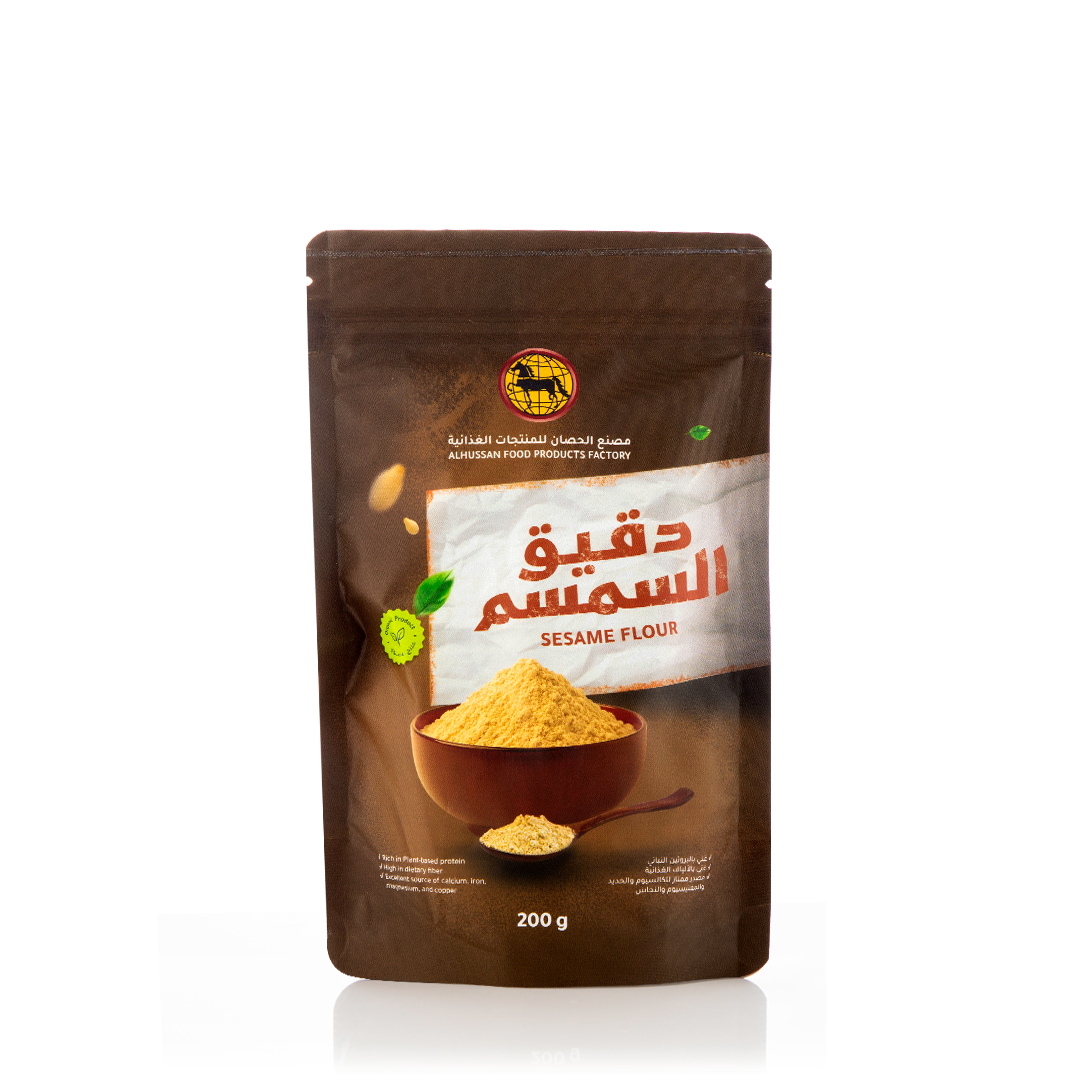
We have been producing organic sesame flour at Al Hosan factory for over thirty years, and we export our products to Bahrain, Kuwait, Kazakhstan, and Germany. Our sesame flour is ground from whole organic sesame seeds without separating the oil, thus retaining all of its natural oil.
Specifications of organic sesame flour
| Source | Selected organic sesame seeds |
| Manufacturing method | Complete grinding of the seed without separating the oil |
| the weight | 200 grams |
| Body | Fine powder in a light beige color |
| Usage | Bread, pastries, baked goods, and beverages |
| Preservation | Store in a tightly sealed container in a dry place away from heat. |
| Producer | Al-Hassan Food Products Factory — Saudi Arabia |
Why sesame flour from a horse?
We have been producing at Al-Hassan factory for over thirty years, and we export our products to Bahrain, Kuwait, Kazakhstan, and Germany. We select organic sesame seeds from a certified source and according to specific standards, then grind them directly in our factory without any intermediaries. Our sesame flour is ground from the whole seed, meaning it retains its natural oil and nothing has been removed.
How to use sesame flour
- In bread and pastries: It replaces 10% to 20% of the amount of flour in the recipe, giving the baked goods a sesame flavor and a slightly darker color.
- In drinks: A teaspoon is added to milk, smoothies, or protein drinks and stirred well, as its consistency blends better with thicker drinks.
- In confectionery: It is used in the preparation of homemade sweets, tahini and biscuits as a partial replacement for white flour.
- On food: Sprinkle on yogurt, oatmeal, or salad.
Sesame flour, tahini, or whole seeds?
| Product | Shape | Most suitable for |
|---|---|---|
| Sesame flour | fine dry powder | Bread, pastries, and mixes in drinks |
| tahini | liquid paste | Ready-made sauces and desserts |
| sesame seeds | Whole seed | Decoration, roasting, and sprinkling |
Frequently Asked Questions
What is sesame flour and how is it made?
Sesame flour is a fine powder made by grinding whole sesame seeds without separating the oil. It differs from tahini in that it is dry, not a paste, and is often used in bread, pastries, and beverages. At Al-Hassan, it is ground from selected organic seeds directly in the factory without any additives.
What is the difference between sesame flour and tahini?
Both come from the same seed; the difference lies in the processing. Tahini is ground into a liquid paste due to its oil content, while sesame flour remains a dry powder that is easily mixed with flour or sprinkled on food. Therefore, flour is suitable for baked goods, while tahini is better suited for sauces.
Does sesame flour contain gluten?
Sesame seeds are naturally gluten-free, and sesame flour is made from the seeds alone without mixing them with any other grains. Those following a gluten-free diet for specific reasons are advised to check the packaging information and verify the supplier's manufacturing conditions.
What is the appropriate ratio for its use in bread?
A comfortable ratio starts at 10% to 20% of the total flour in the recipe. Anything more than that will make the dough heavier and less elastic because sesame flour lacks gluten, which gives dough its elasticity. Start with a small percentage and gradually increase it as desired.
How should it be stored and what is its shelf life?
Store in its tightly sealed container in a dry place away from sunlight and heat sources. Because it retains its natural seed oil, heat and humidity are the primary factors affecting its flavor. The most obvious indicator of spoilage is the smell: if it becomes pungent or rancid, do not use it.
Complementary products
If you prefer whole seeds, try organic sesame seeds . If you're looking for oil, the best is 250ml of cold-pressed, natural sesame oil from the same harvest. You can browse all the organic products from the factory.